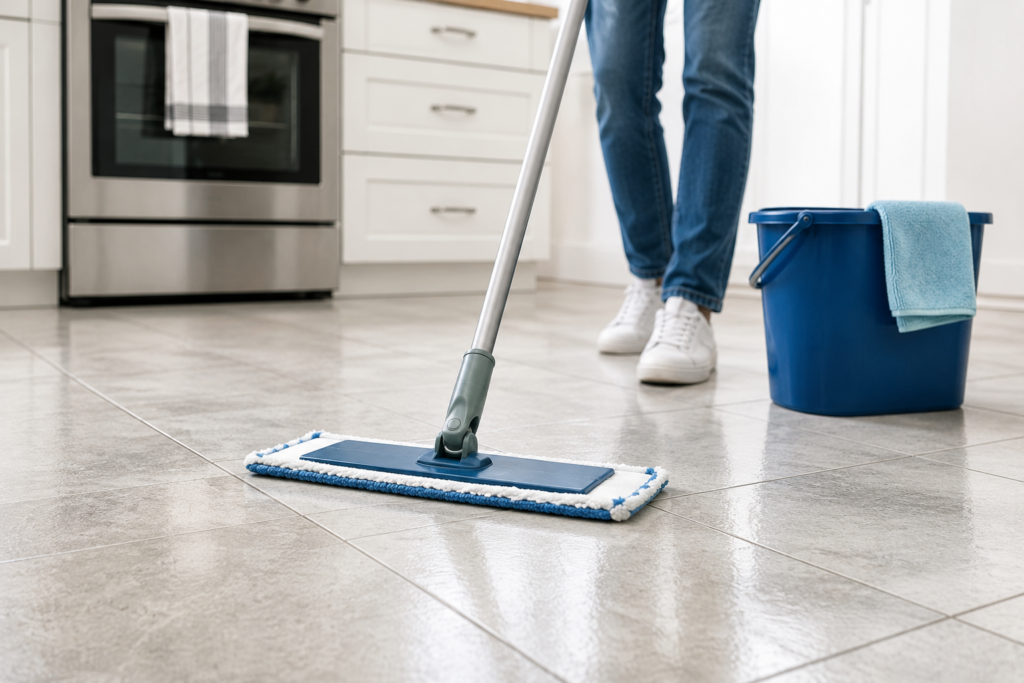
A clean kitchen floor can completely transform the look of your home. From food crumbs and sticky spills to muddy footprints and everyday dust, your kitchen floor handles constant traffic and quickly collects dirt. Even if your countertops and appliances are spotless, a dirty floor can make the entire kitchen feel unclean.
The good news? You don’t need harsh chemicals to keep your floors looking their best. With a few simple, environmentally responsible cleaning products and the right techniques, you can safely clean every type of kitchen flooring—from tile and hardwood to laminate, vinyl, linoleum, and natural stone.
Kitchen Floor Cleaning Supplies
Before you begin, gather these household essentials:
- Microfiber mop or reusable mop with washable pads
- Soft-bristle broom or vacuum
- Distilled white vinegar
- Baking soda
- Mild dish soap
- Warm water
- Spray bottle
- Soft cloths or sponges
- Soft-bristle brush or old toothbrush
Tip: Always check your flooring manufacturer’s care instructions before using any cleaning solution, especially on hardwood, marble, granite, or specialty flooring.
How to Clean Tile Floors
Tile floors are durable and easy to maintain, but dirt and grease can build up over time, especially in grout lines.
Step 1: Remove Loose Dirt
Sweep or vacuum the floor to eliminate dust, crumbs, and debris.
Step 2: Mop the Surface
Mix one gallon of warm water with ½ cup of distilled white vinegar. Mop the floor thoroughly to remove grease and everyday grime.
Step 3: Remove Tough Stains
For stubborn spots, add a few drops of mild dish soap to the cleaning solution before mopping again.
How to Clean Grout
Grout tends to trap dirt and stains, making it one of the hardest parts of tile flooring to clean.
Step 1: Apply Baking Soda
Sprinkle baking soda directly onto the grout lines.
Step 2: Spray Vinegar
Lightly spray white vinegar over the baking soda. The fizzing reaction helps loosen embedded dirt.
Step 3: Scrub
Use a soft-bristle brush or an old toothbrush to gently scrub the grout.
Step 4: Rinse and Dry
Wipe away residue with clean water and dry using a microfiber cloth.
Avoid bleach or abrasive chemicals, which can weaken grout over time.
How to Clean Hardwood Floors
Hardwood floors require gentle cleaning to protect their finish and prevent moisture damage.
Step 1: Sweep or Vacuum
Use a soft brush attachment to remove dust and grit.
Step 2: Prepare a Mild Cleaning Solution
Mix one gallon of warm water with a few drops of mild dish soap.
Step 3: Mop Carefully
Lightly dampen a microfiber mop and clean following the direction of the wood grain.
Step 4: Dry Immediately
Use a clean towel or microfiber cloth to remove excess moisture.
How to Clean Laminate Floors
Laminate flooring offers the beauty of hardwood while requiring less maintenance.
Step 1: Sweep or Vacuum
Remove loose dirt using a soft-bristle broom or vacuum.
Step 2: Mop Lightly
Mix one gallon of warm water with one teaspoon of white vinegar.
Step 3: Use Minimal Water
Mop with a barely damp microfiber mop to prevent moisture from seeping into seams.
Avoid steam mops and abrasive scrubbers, which may damage the protective surface.
How to Clean Vinyl Floors
Vinyl flooring is moisture-resistant and simple to maintain.
Step 1: Remove Dust
Sweep or vacuum thoroughly.
Step 2: Mop the Floor
Mix one gallon of warm water, ½ cup of white vinegar, and a few drops of mild dish soap.
Step 3: Rinse
Mop the floor and rinse with clean water.
Step 4: Remove Scuff Marks
Gently rub stubborn scuffs using a soft cloth dipped in baking soda.
Avoid harsh chemical cleaners that may discolor or damage vinyl flooring.
How to Clean Linoleum Floors
Linoleum benefits from gentle cleaning methods that preserve its natural finish.
Step 1: Sweep the Floor
Remove loose dirt and debris.
Step 2: Mop
Combine one gallon of warm water with ¼ cup of white vinegar and mop thoroughly.
Step 3: Dry Completely
Prevent water spots by drying the floor immediately.
Step 4: Buff for Shine
Finish with a soft, dry microfiber cloth.
How to Clean Stone Floors
Natural stone flooring, including slate, marble, and granite, requires special care.
General Cleaning Tips
- Use only pH-neutral cleaners.
- Avoid vinegar, lemon, or acidic products.
- Wipe spills immediately.
- Never use abrasive brushes or scrub pads.
Cleaning Slate Floors
Sweep regularly and mop with warm water mixed with a few drops of mild dish soap. Dry thoroughly with a microfiber cloth.
Cleaning Marble & Granite Floors
Dust daily using a microfiber dust mop. For deeper cleaning, mix one gallon of warm water with one teaspoon of mild dish soap and mop gently.
Tips to Keep Your Kitchen Floor Cleaner Longer
Simple daily habits can reduce dirt buildup and make deep cleaning easier.
- Place entry mats to trap dirt and moisture.
- Wipe up spills immediately.
- Sweep or vacuum every day.
- Deep clean your kitchen floor at least once a week.
- Use microfiber mops to reduce streaks and residue.
Let The Cleaning Authority Do the Hard Work
Keeping kitchen floors spotless takes time, especially in busy households. If you’re looking for professional help, The Cleaning Authority offers reliable house cleaning services using environmentally responsible products and proven cleaning methods.
Whether you need routine cleaning or a complete kitchen deep clean, their experienced team can help restore the shine to your floors and the rest of your home.
Learn more or request a free estimate by visiting: